


Cimgo

For what use?


Share the joy of the downhill
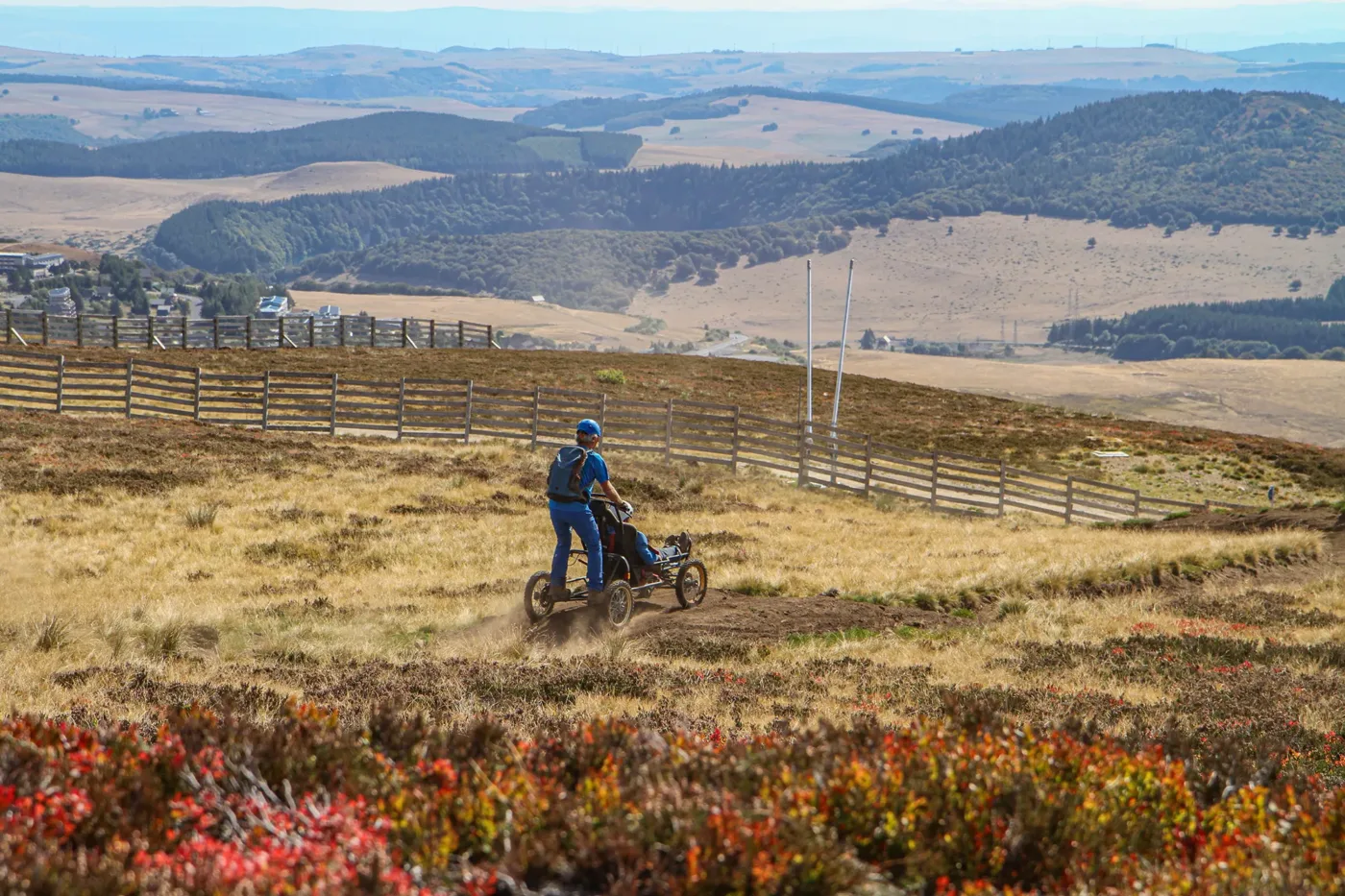
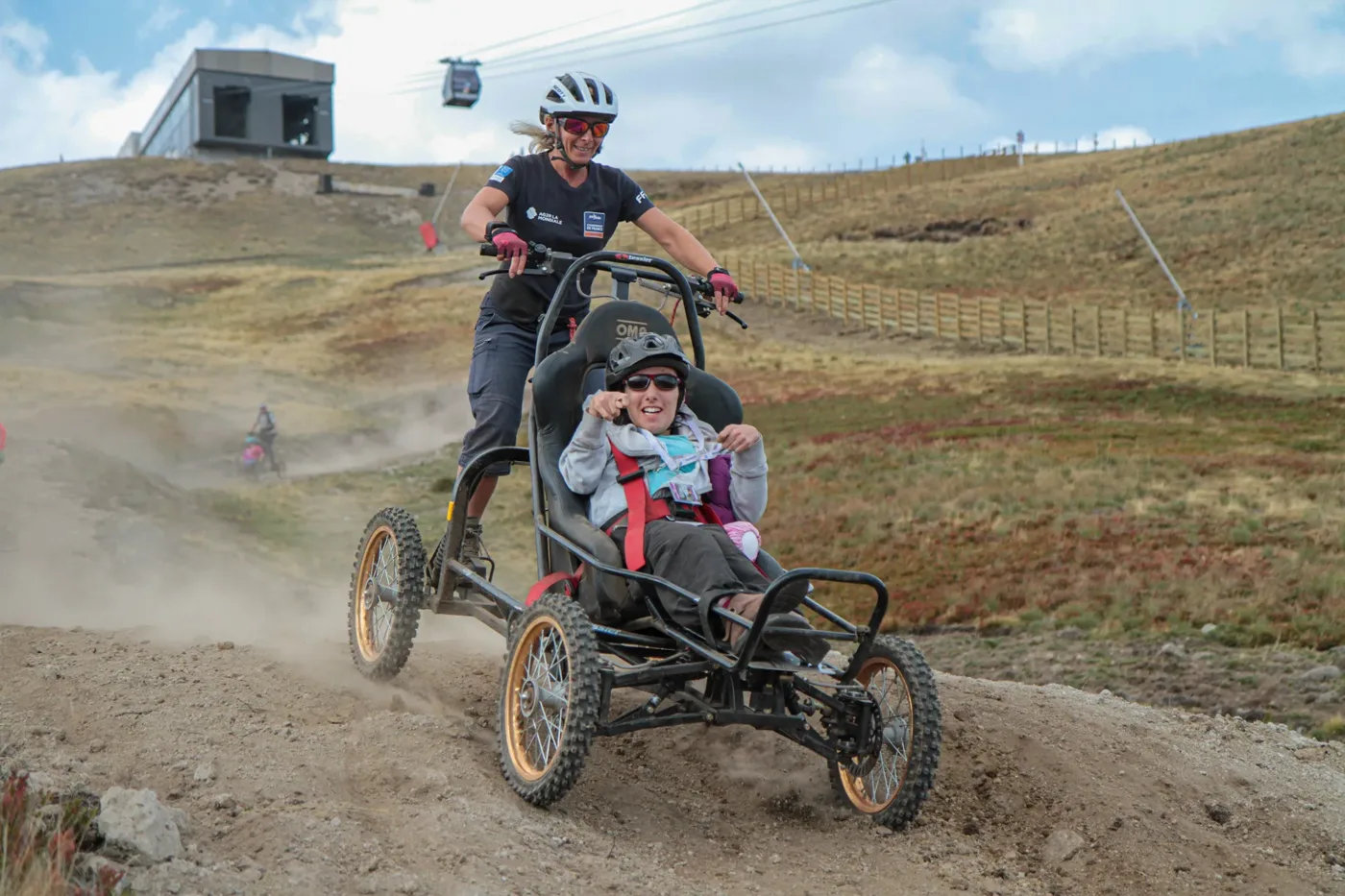
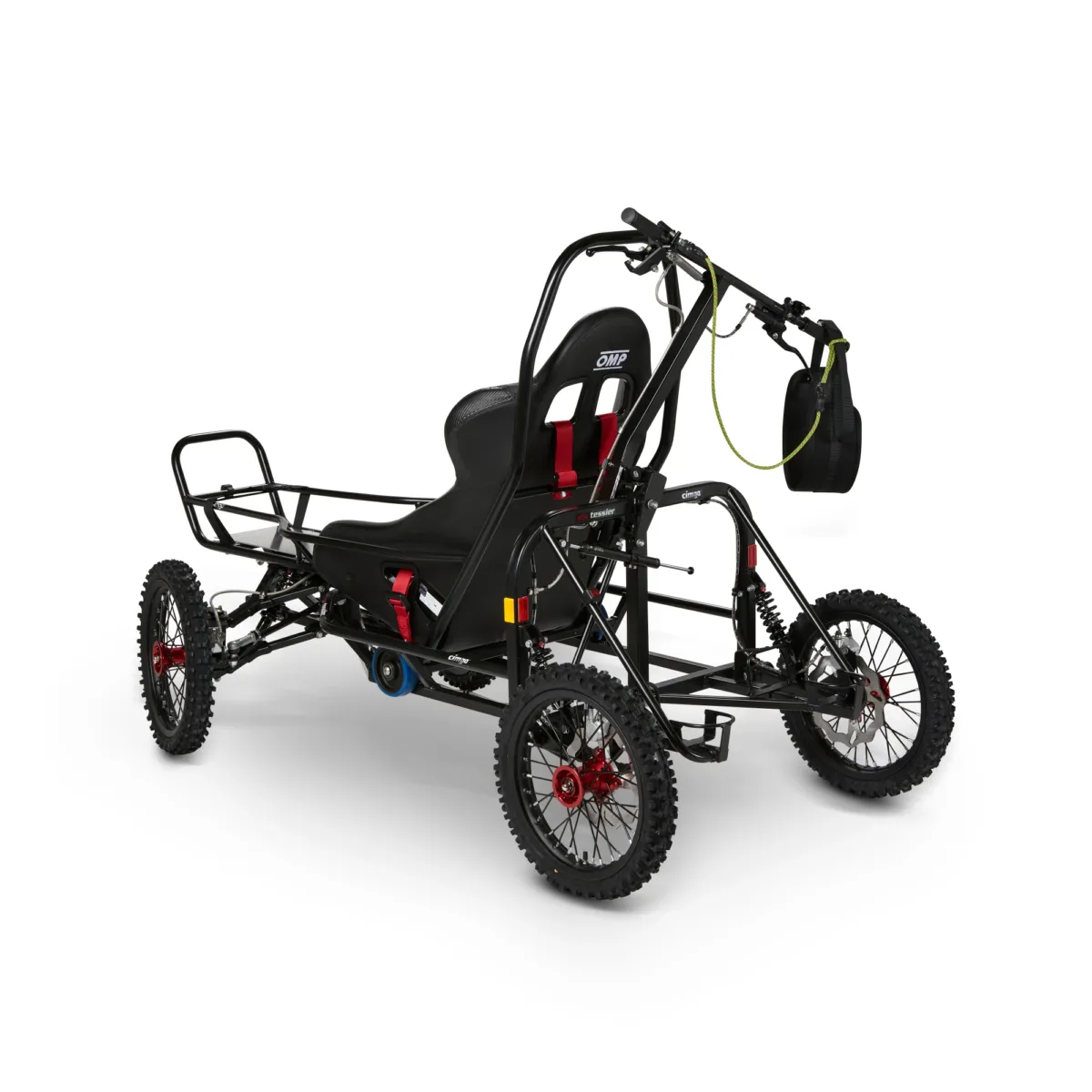
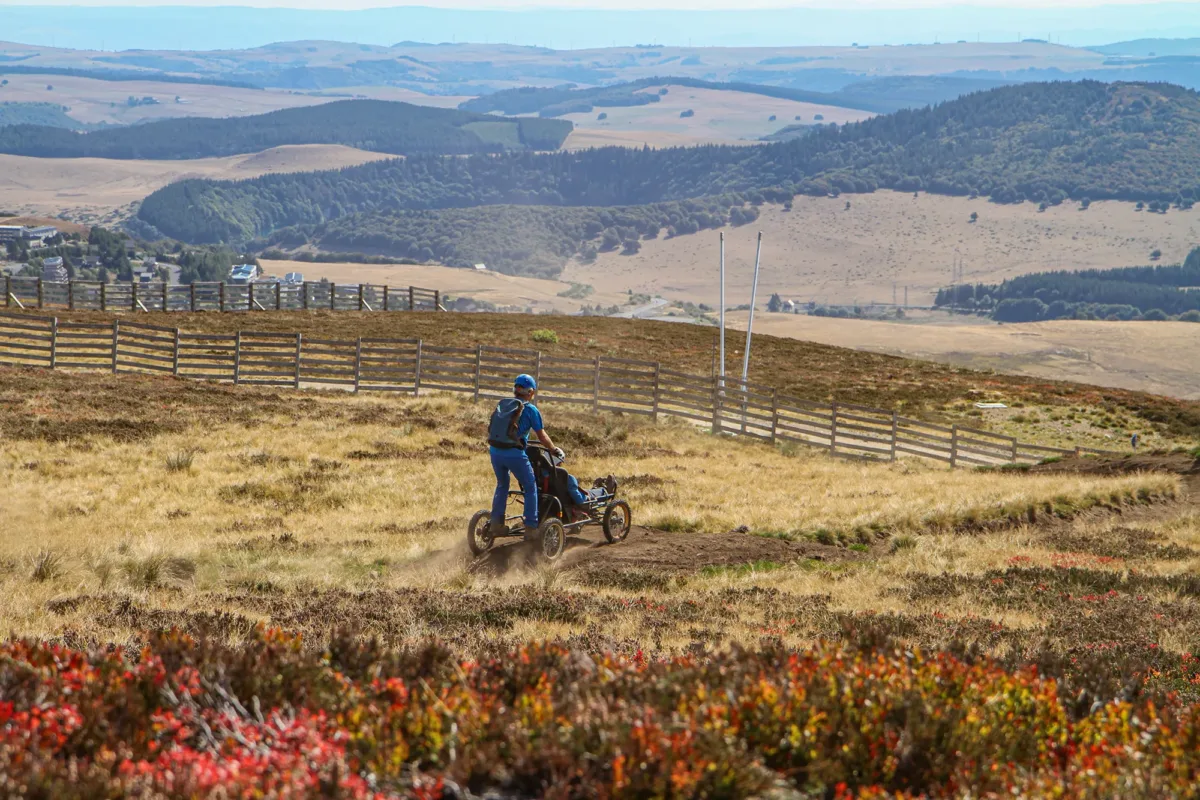
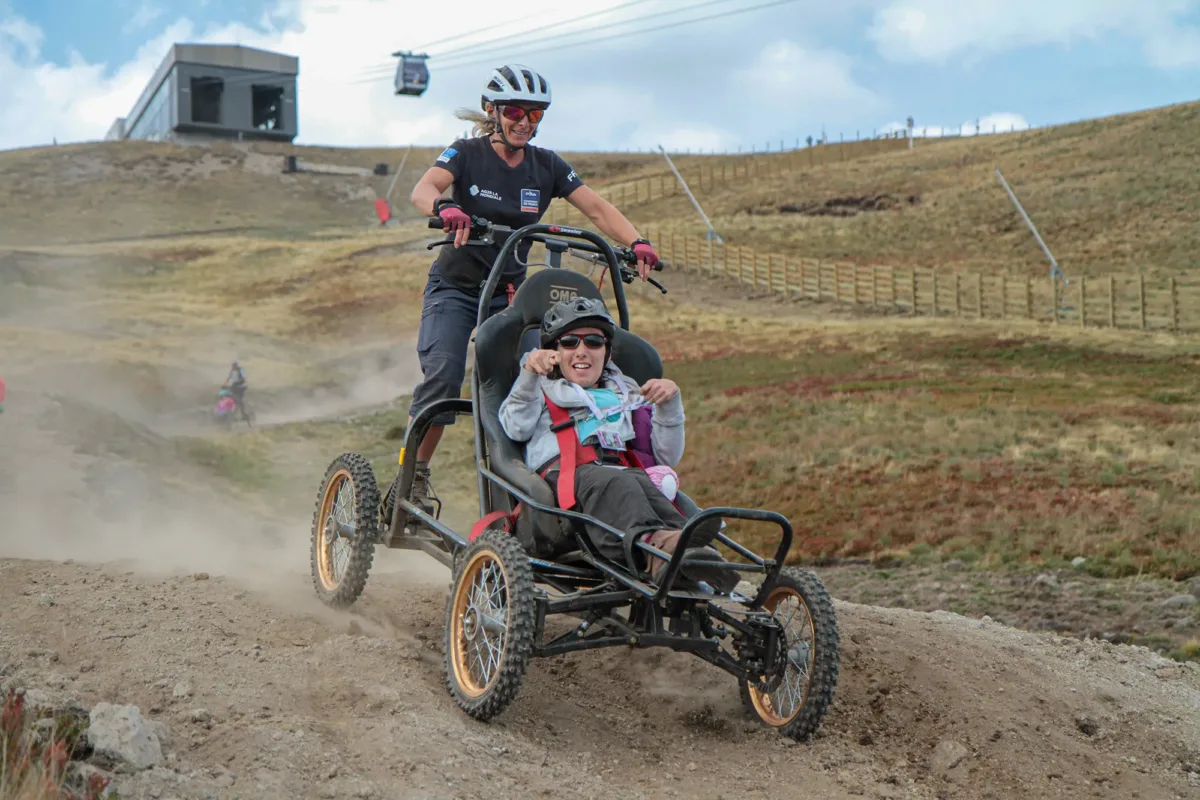
Its four wheels, suspension and braking make it possible to explore a variety of routes, chosen according to conditions and the passenger's needs. From the pleasure of riding in the heart of nature to the thrills of a more technical trail, the Cimgo lets two people share the adventure.
Comfort and sharing off-road

Sharing

Comfort

Control

Accessibility
Technical specifications
Comfort
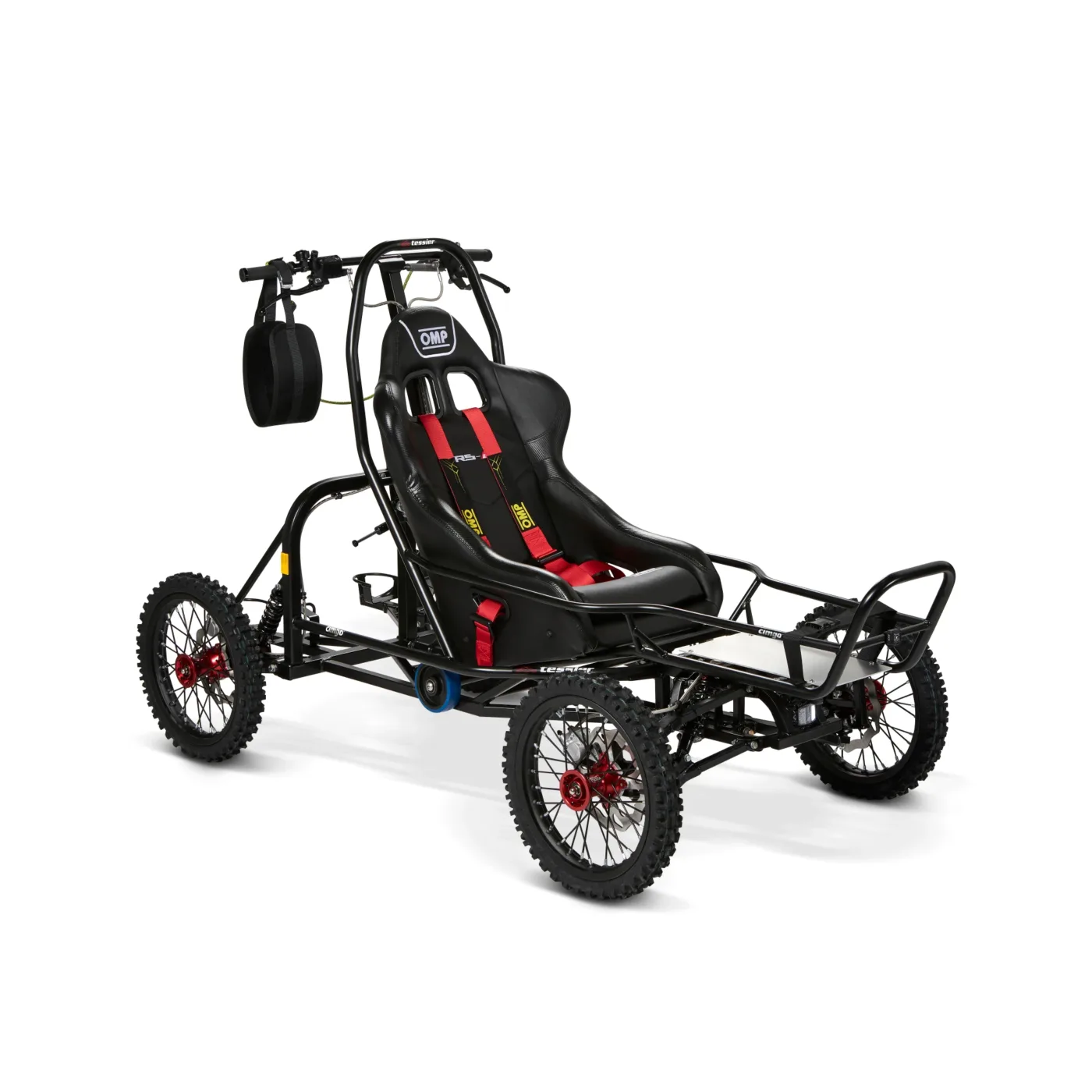
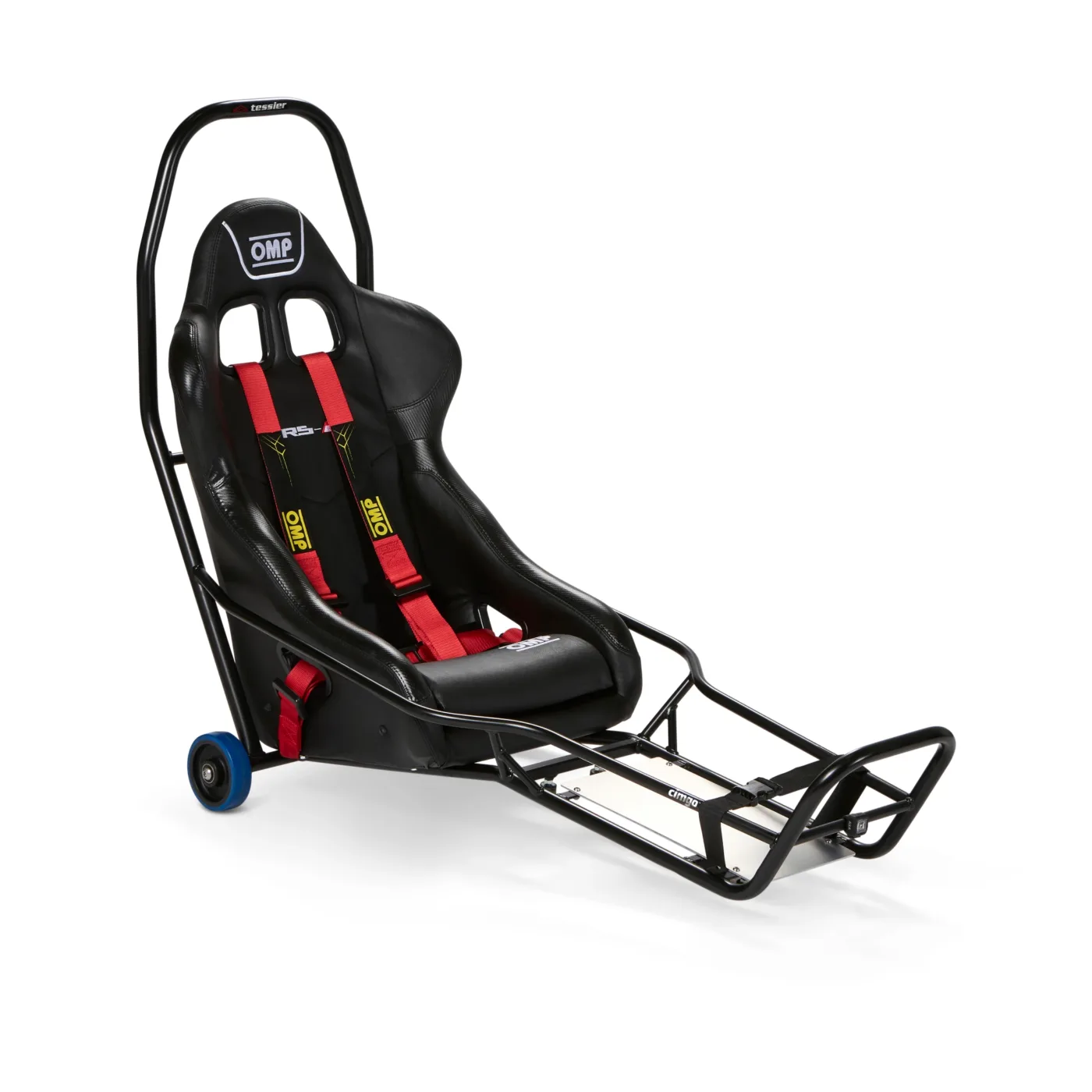
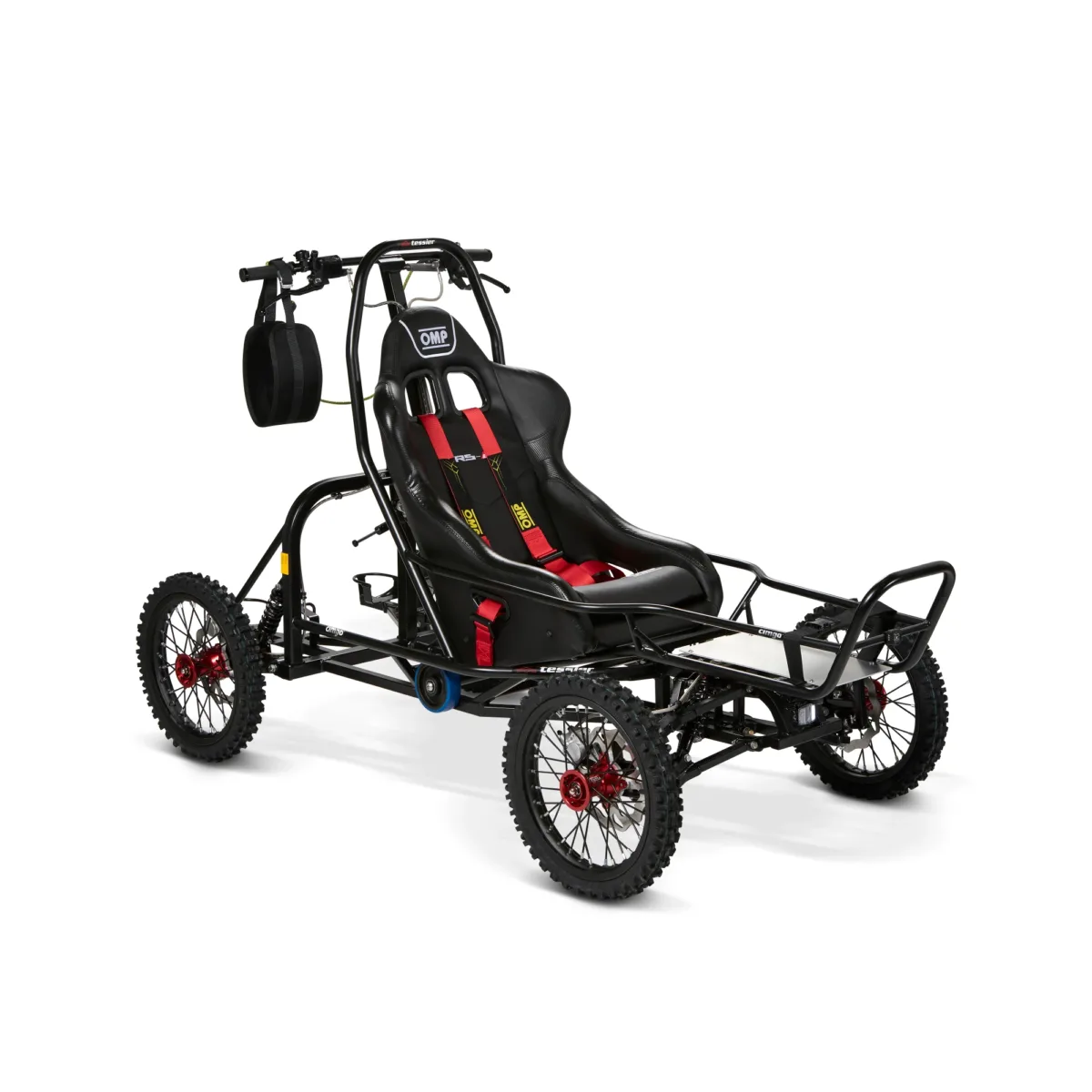
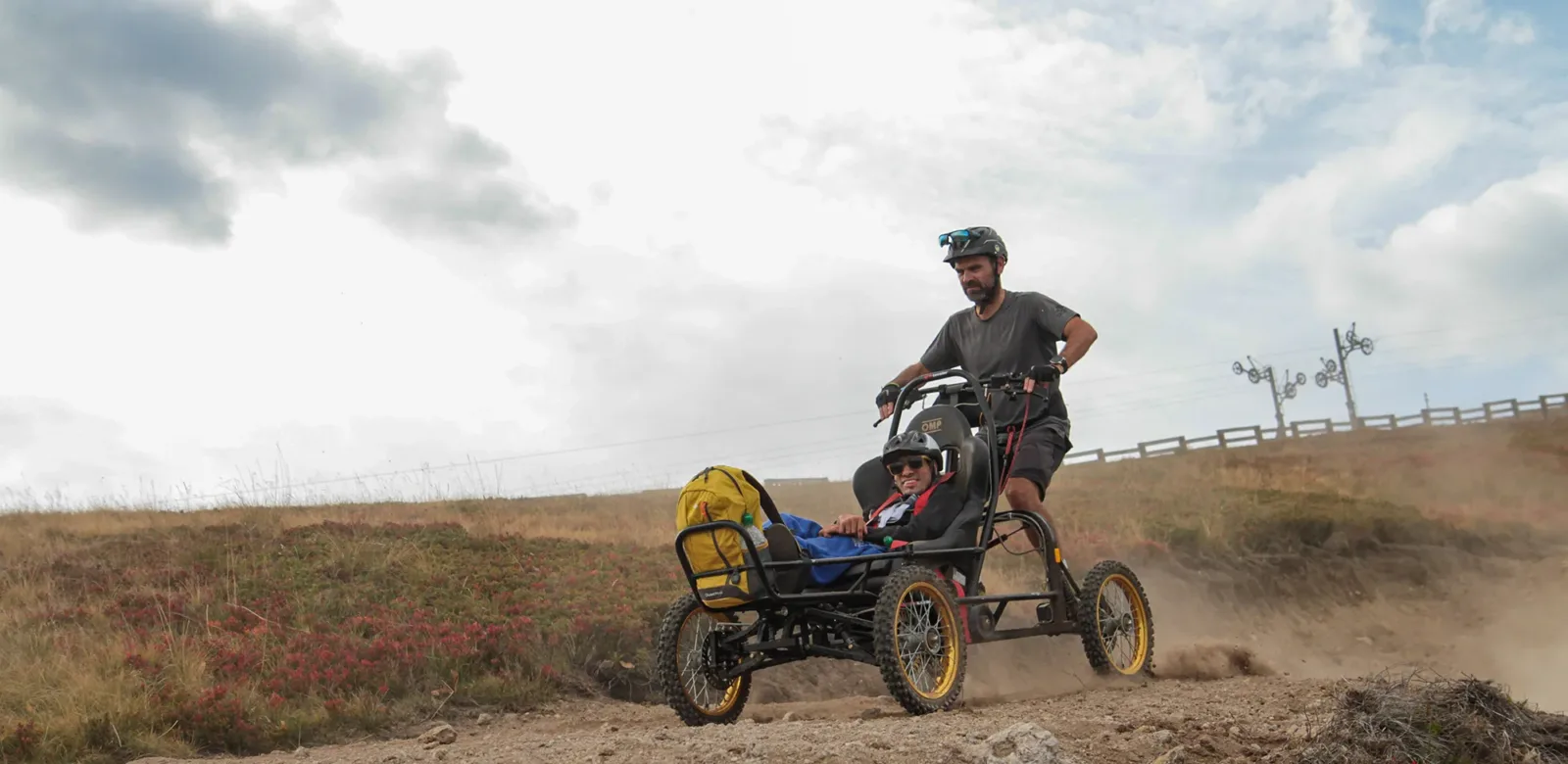
The passenger sits in a bucket seat while four suspension units absorb the movements of the terrain. The pilot has dedicated footrests to support the downhill. This arrangement allows the sensations to be shared while adapting the pace to the passenger and the chosen route.
Grip
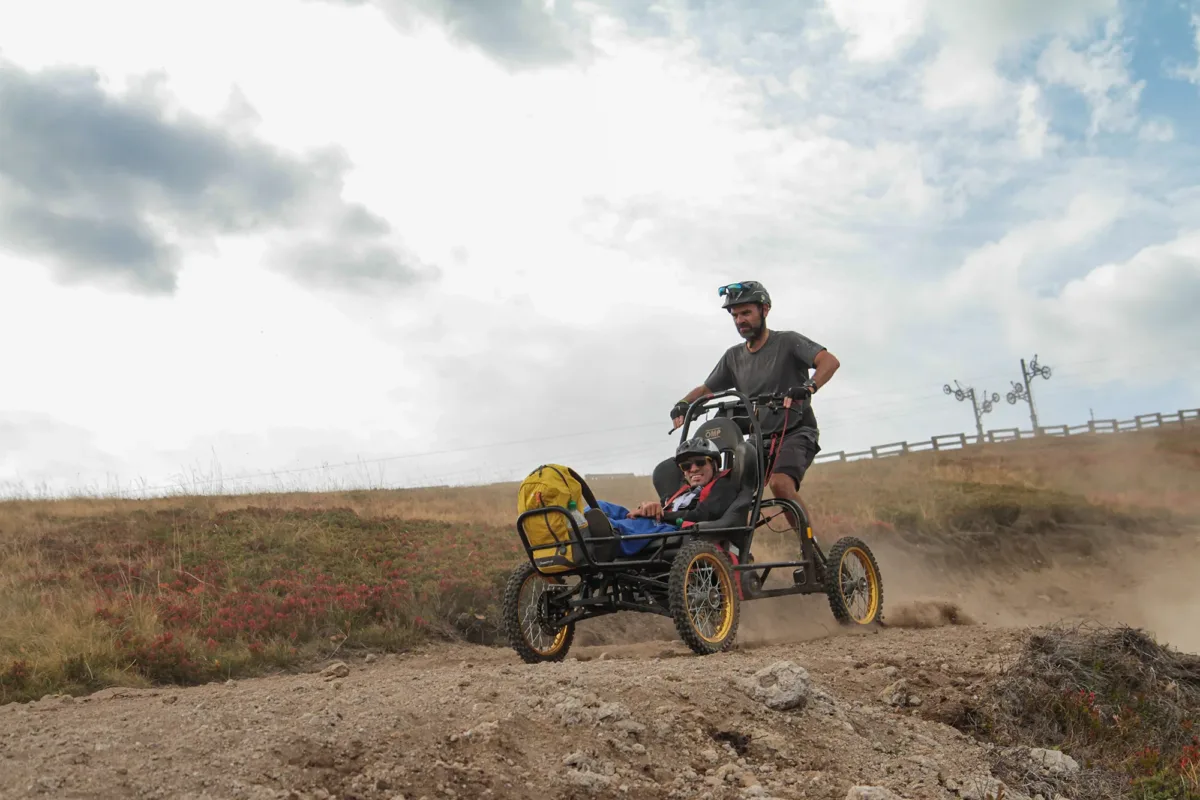
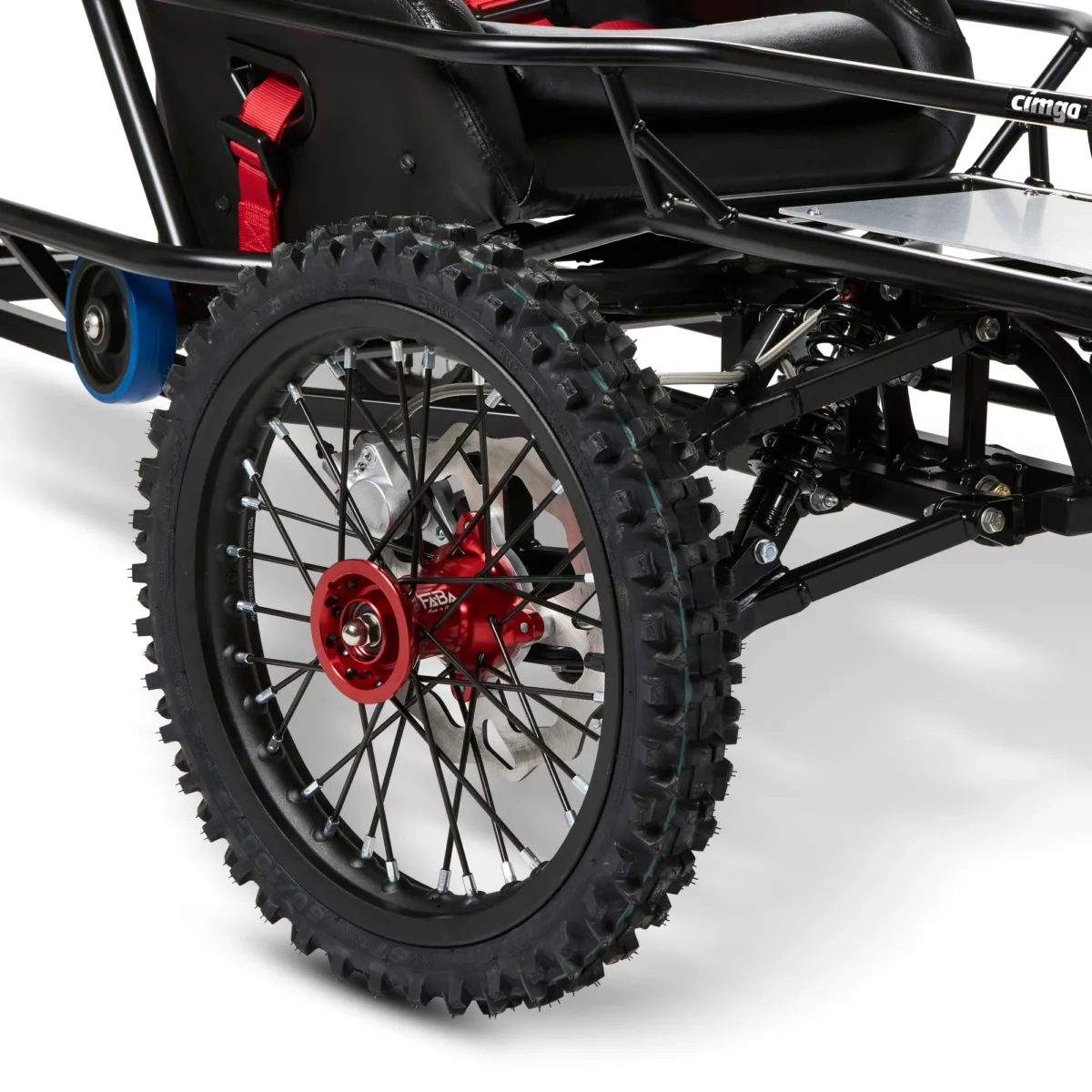
Four 14-inch motorcycle wheels fitted with cross tyres ensure contact with the terrain. Their design is suited to downhill riding on varied trails. The pilot chooses the line and speed according to the terrain, ground conditions and the passenger's needs.
Braking
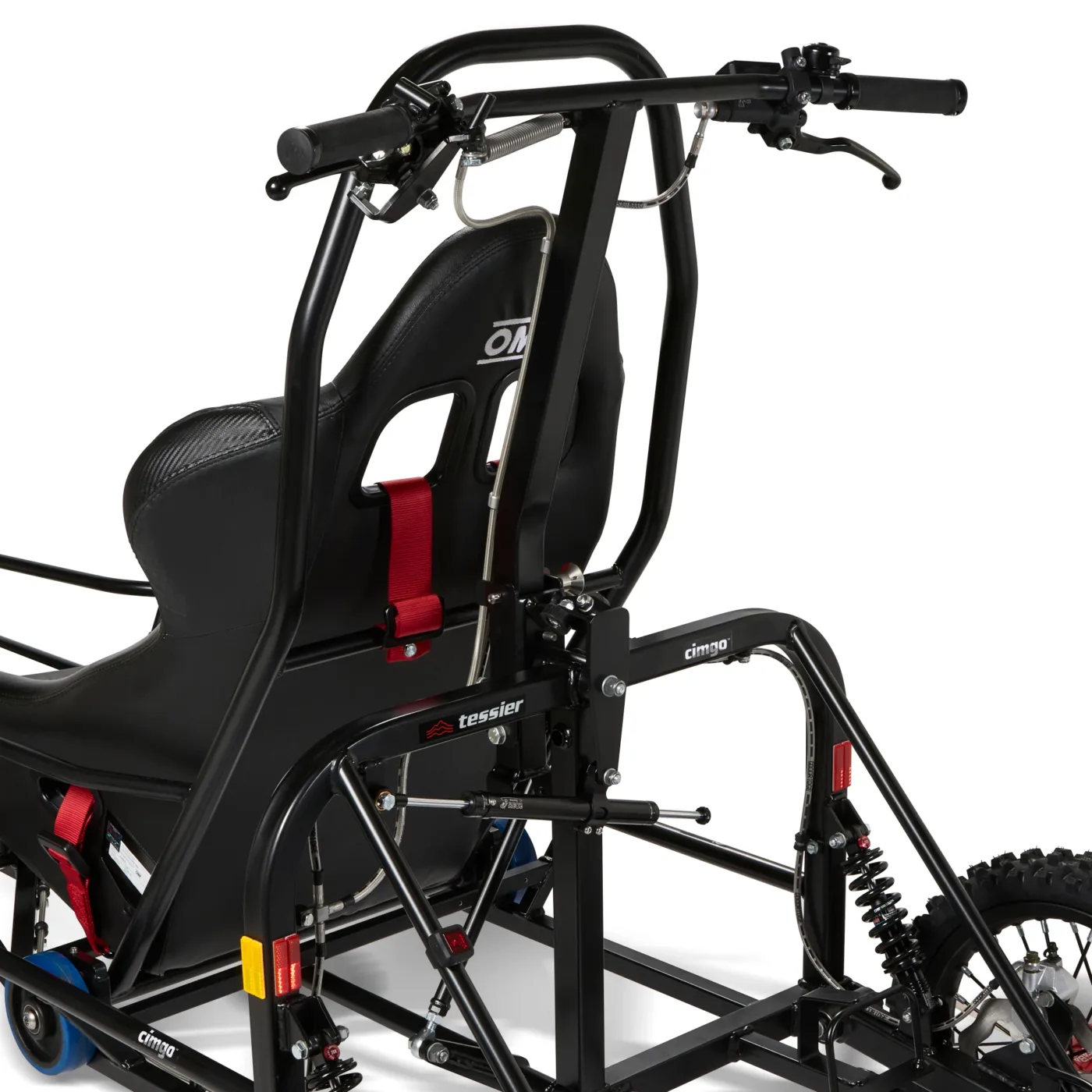
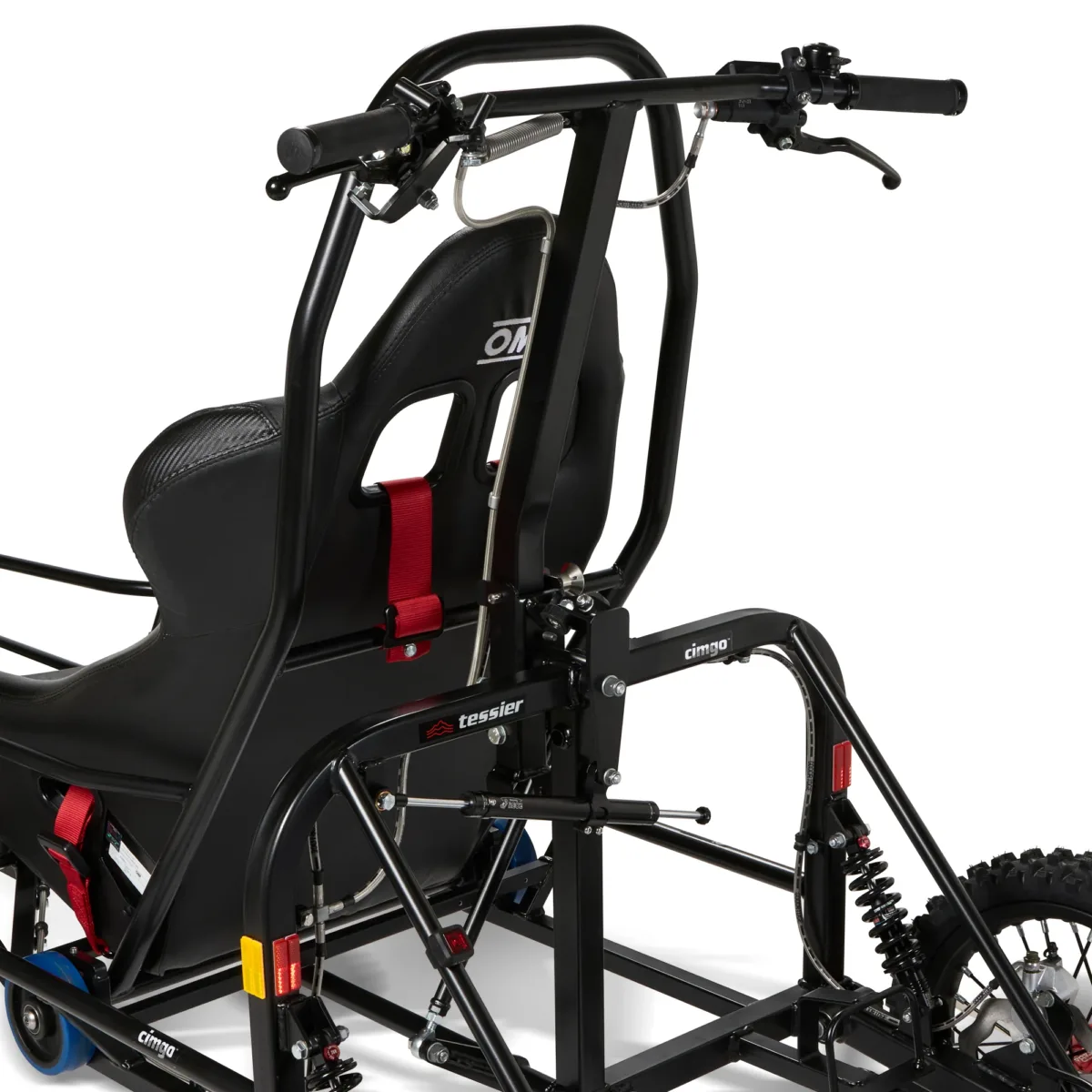
The Cimgo has four Brembo hydraulic disc brakes. Two independent circuits control the front and rear wheels. This design gives the pilot the means to manage speed during the downhill and is a central part of learning to pilot.
Safety
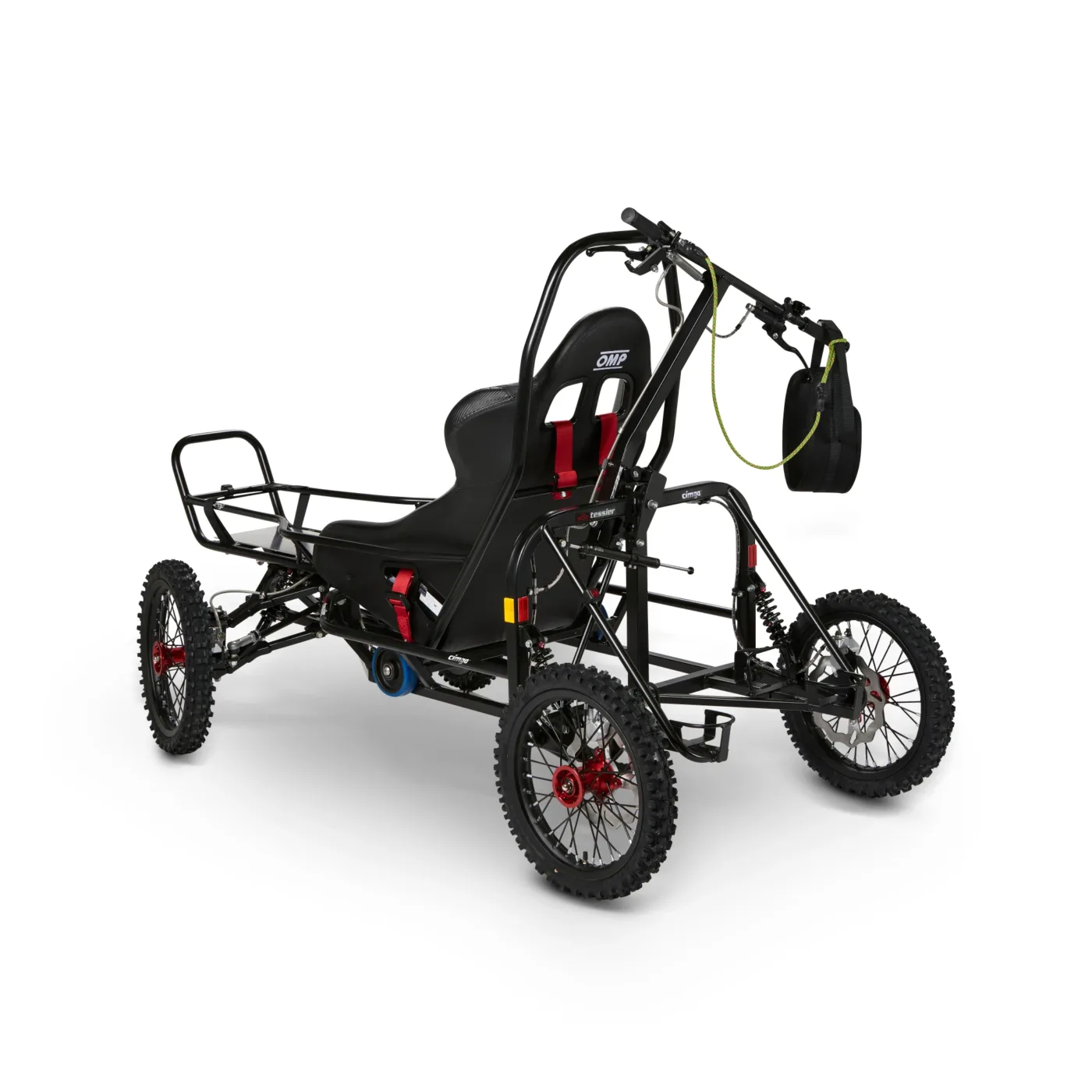
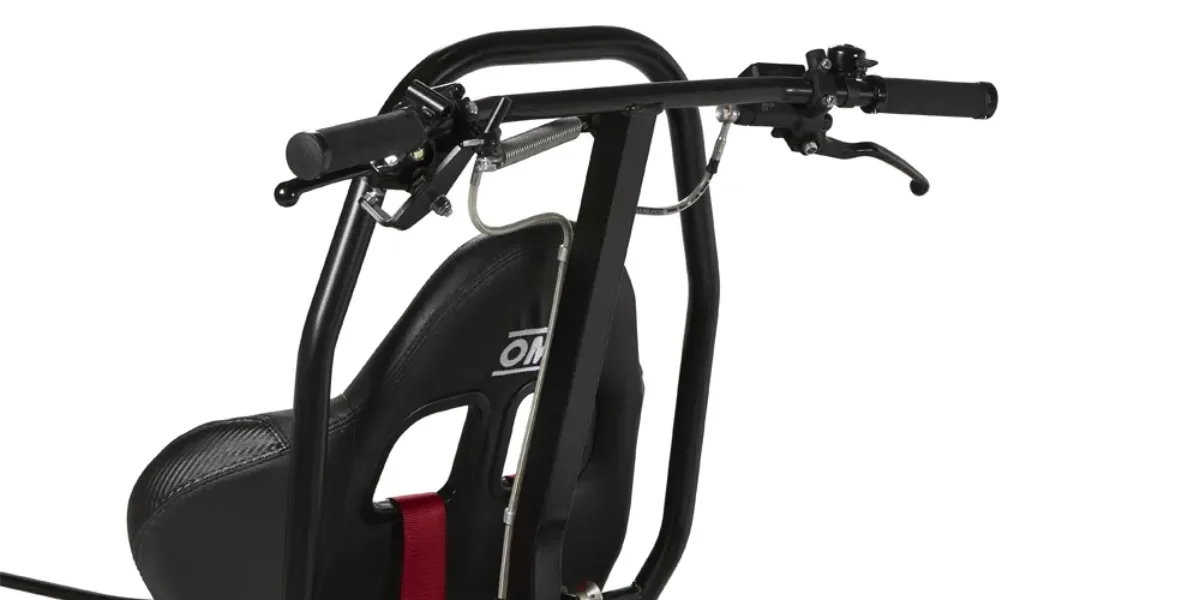
A roll bar protects the passenger and a lifeline connects the pilot to the braking system. If the pilot falls, it automatically applies the front brakes. The system also serves as a parking brake. This equipment is used following the procedures taught during training.
Modularity
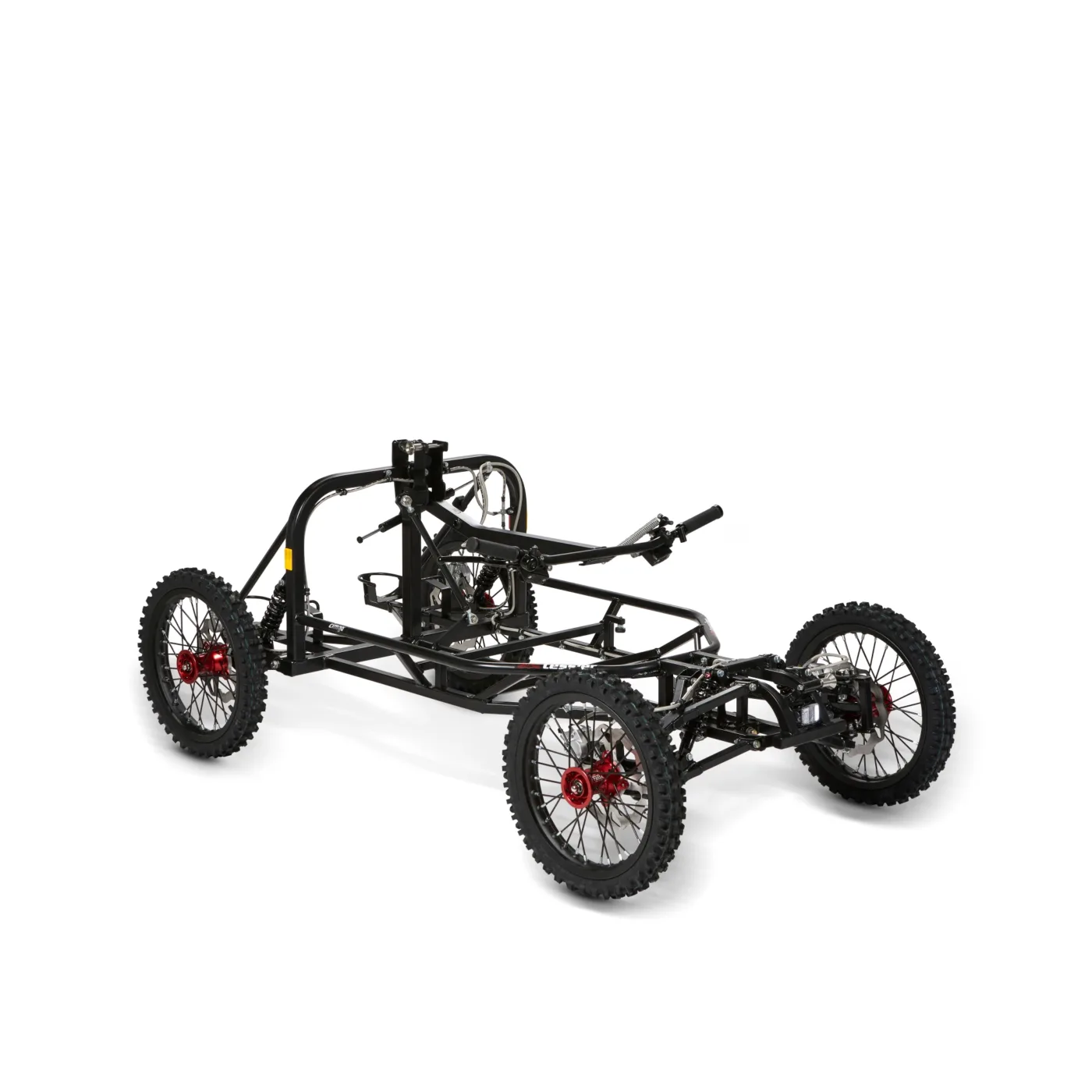
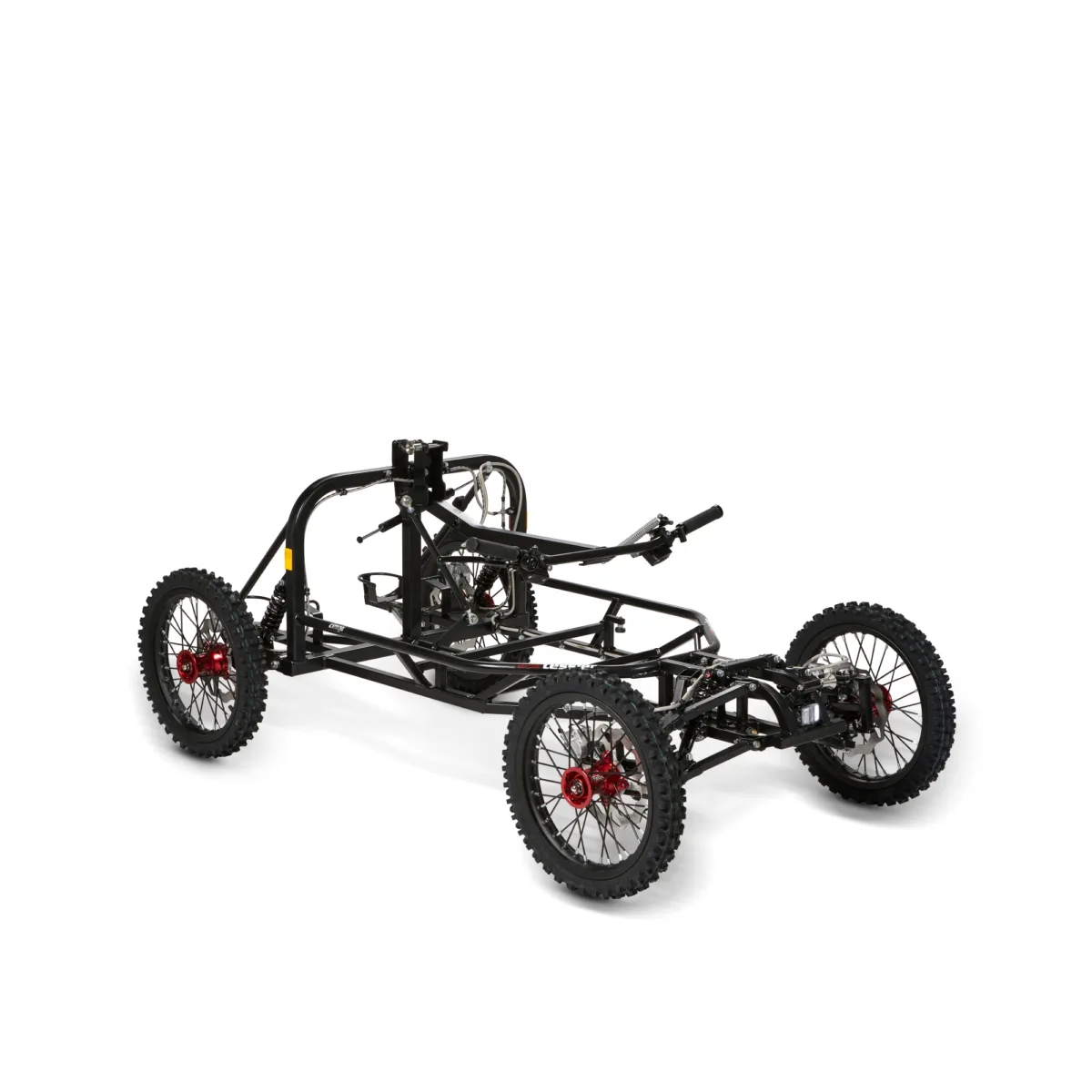
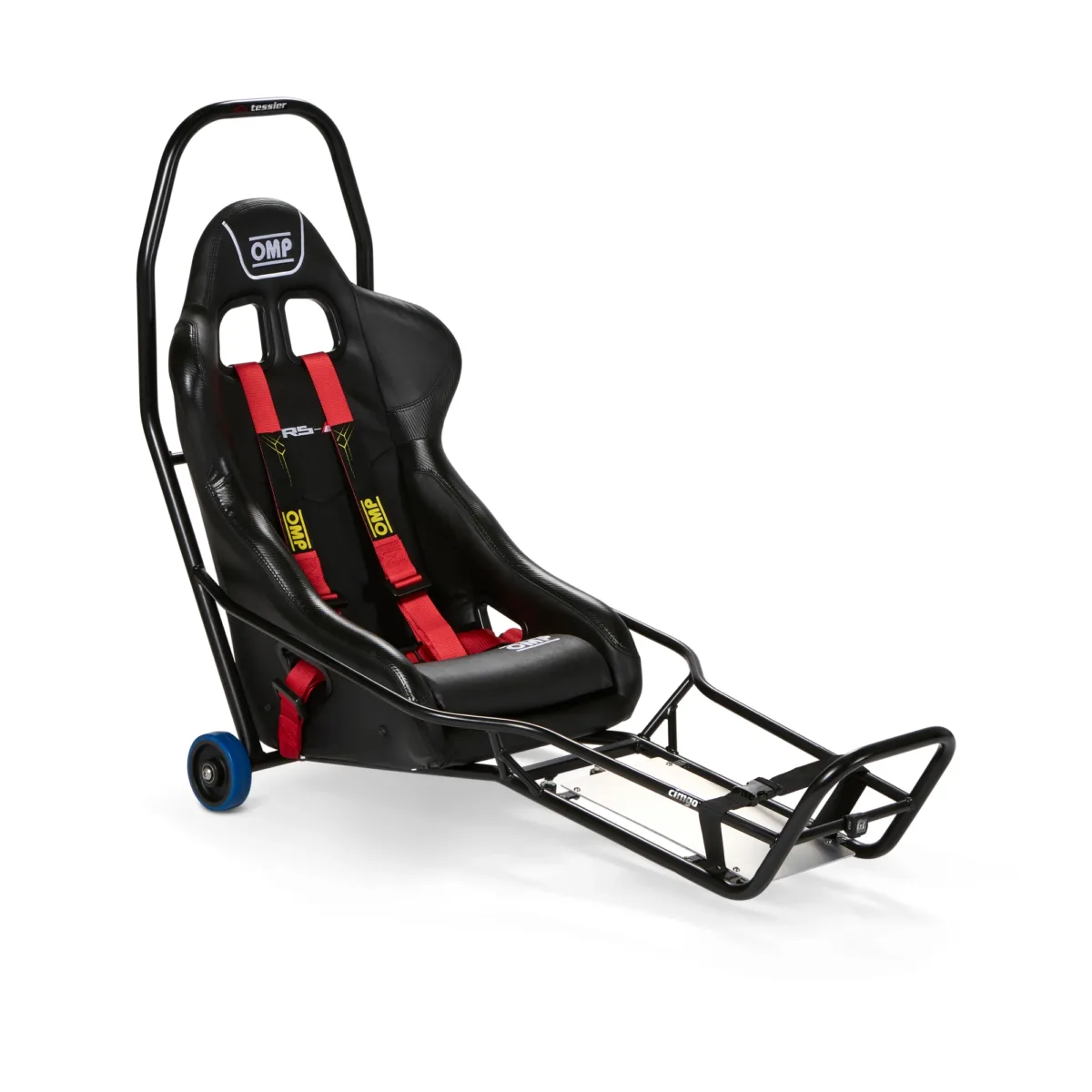
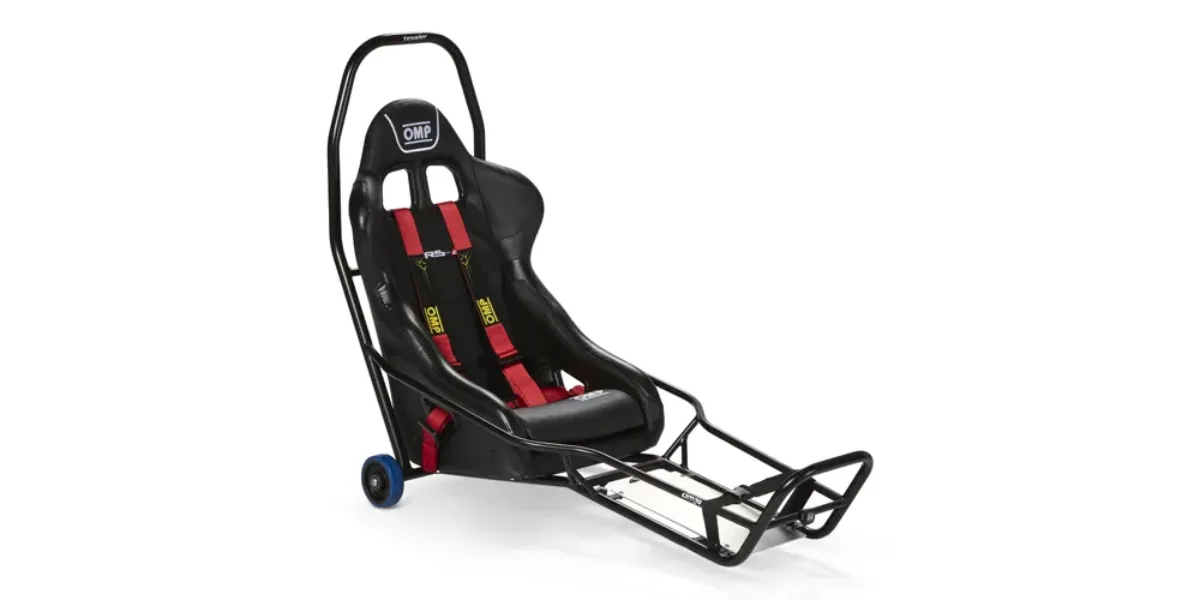
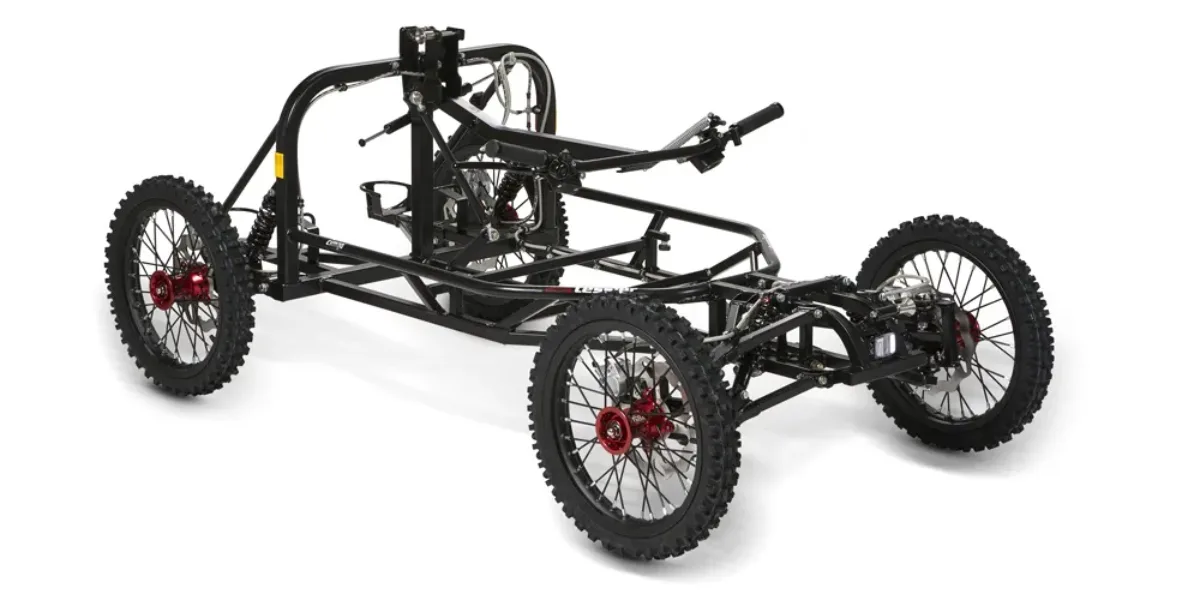
The seat detaches from the main frame with the passenger still seated. Its small wheels make it easier to move towards a lift. The frame's handlebar folds to reduce bulk. This design makes it possible to arrange access to certain lifts depending on the facilities and the site's procedures.
Transport
The Cimgo's handlebar folds down for easier transport. It is also handy for storage.
FAQ
Who is the Cimgo for?
It is designed for people who wish to experience off-road downhill with a pilot, particularly when independent use is not possible. The passenger does not need to steer the chair. Their positioning and the choice of route are adapted to their support and comfort needs.
How does the pilot steer the Cimgo?
The pilot is positioned at the rear on dedicated footrests. They steer the front wheels using a tilting handlebar and manage braking during the downhill. The passenger enjoys the outing from their bucket seat, without having to take part in piloting.
What training is required?
A training A specific two-day training course is mandatory to pilot the Cimgo. It covers piloting, seating the passenger, maintenance and rules of use. It is delivered by TESSIER partner trainers; contact us to find out which options suit your project.
What is the maximum passenger weight?
The Cimgo carries one passenger weighing up to 120 kg. Support needs, transfer conditions and the pilot's abilities must also be taken into account. Our team will help you define the equipment and the organization of your practice.
What terrain can it be used on?
The Cimgo is designed for off-road downhill: forest tracks, mountain routes and more technical courses depending on conditions. The pilot chooses terrain suited to their training and to the passenger. Scouting the route makes it possible to anticipate the sections, access points and the finish.
Can ski lifts be used?
The design of the Cimgo allows theuse of chairlifts or suitable gondolas: the passenger seat detaches from the frame and the handlebar folds down. Access and boarding procedures must be confirmed with the lift operator. The training prepares the pilot for the necessary handling.
The device is approved in France for use on ski lifts.
How do you get back up after a downhill?
Depending on the site, the logistics may rely on suitable ski lifts or on a transport solution. The Cimgo can also be towed in appropriate configurations. This arrangement must be defined with the supervisors and the site's partners before the outing.
What is the difference from the Trialp?
The Cimgo is an assisted downhill chair: a trained pilot steers the device for their passenger. The Trialp is an electric all-terrain chair with three drive wheels, designed for independent driving. They meet different needs.
Where to try it?
Tick only the area/activity you are interested in to make the map easier to read.
This map is provided for guidance only. We invite you to contact the organizations directly for more information and to confirm the available equipment.
We invite managers of organizations to contact us for any update to their information.